Our Services
Transportation of Life-Saving Equipment by Drone
The need for immediate availability of equipment
Interventions with integrated rescue system units often take place in environments where minutes – and sometimes even seconds – are crucial. Although units are normally equipped with the necessary materials, experience shows that during complicated or extreme interventions, specific equipment may unexpectedly be missing in the field. Technical failures may occur, such as a hose bursting, loss or damage of equipment, or a situation may arise that was not foreseen in the original intervention plan.
In such cases, it is often necessary to return to headquarters or another logistics station. However, this can be significantly complicated by the terrain, weather conditions, or the nature of the intervention itself. It was precisely this need that gave birth to a project focused on the use of transport drones as a fast and flexible logistics tool.
Transport drone project concept
The basic idea behind the project is to ensure that emergency personnel in the field have exactly what they need at any given moment – without having to interrupt their work or cause delays by transportation by land. Transport drones make it possible to respond to unexpected events in real time and deliver materials directly to the scene.
The project is designed to complement existing logistics procedures, not replace them. The aim is to cover the critical time period when missing equipment can negatively affect the course of the intervention or endanger the health of both responders and those being rescued.
Wide range of material transport options
The project includes a transport drone with accessories that enable the transport of a wide range of cargo. Using transport nets or ropes, it is possible to deliver almost anything weighing up to 30 kg. In practice, this could include basic consumables, water bottles, spare technical equipment, but also larger items, including medical stretchers.
This flexibility allows us to respond not only to technical problems in the field, but also to sudden changes in the situation when a completely different type of equipment is needed than originally expected.
Medical box and cooperation with the Emergency Medical Service
Special emphasis is placed on supporting medical interventions. The project therefore includes a specifically equipped medical box, which was created in cooperation with the Emergency Medical Service. The box is prepared to contain key medical supplies needed to provide first aid or stabilize a patient until the arrival of medical personnel.
Although each integrated rescue system unit has basic medical equipment at its disposal, real-life interventions show that situations may arise where additional supplies are needed – and within minutes. This is where the transport drone becomes an essential tool that can overcome both time and space barriers.
Practical experience from training
The benefits of the project are also evident from specific experiences during training exercises. In one scenario, a unit in the field urgently needed medical supplies. Due to the inaccessible terrain, the emergency medical services crew took approximately 18 minutes to reach the scene. The transport drone was able to deliver the necessary supplies in 3 minutes.
This difference clearly demonstrates the potential of drone logistics in crisis situations, where every minute can determine the further course of the intervention or the survival of the injured person.
Technology used
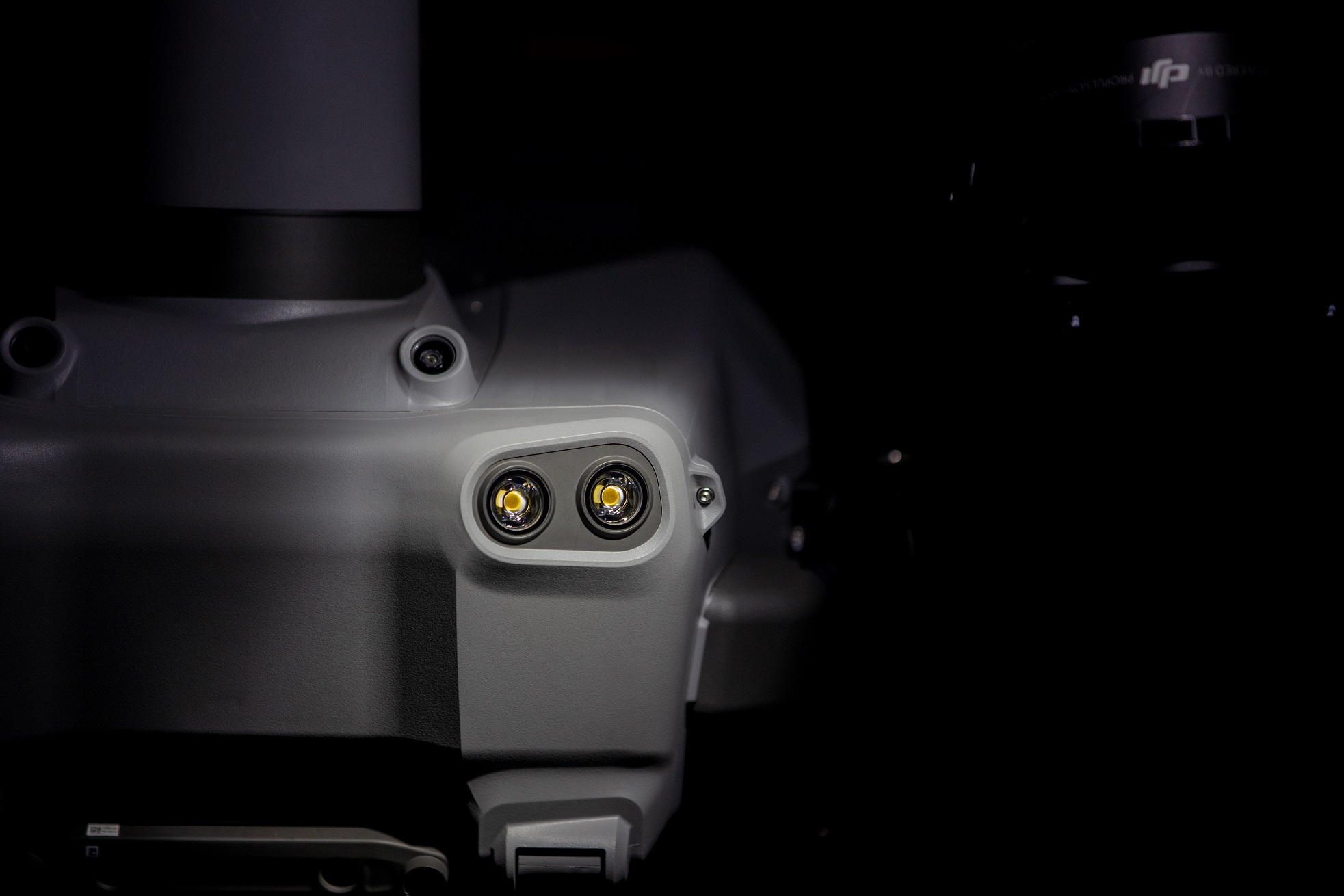
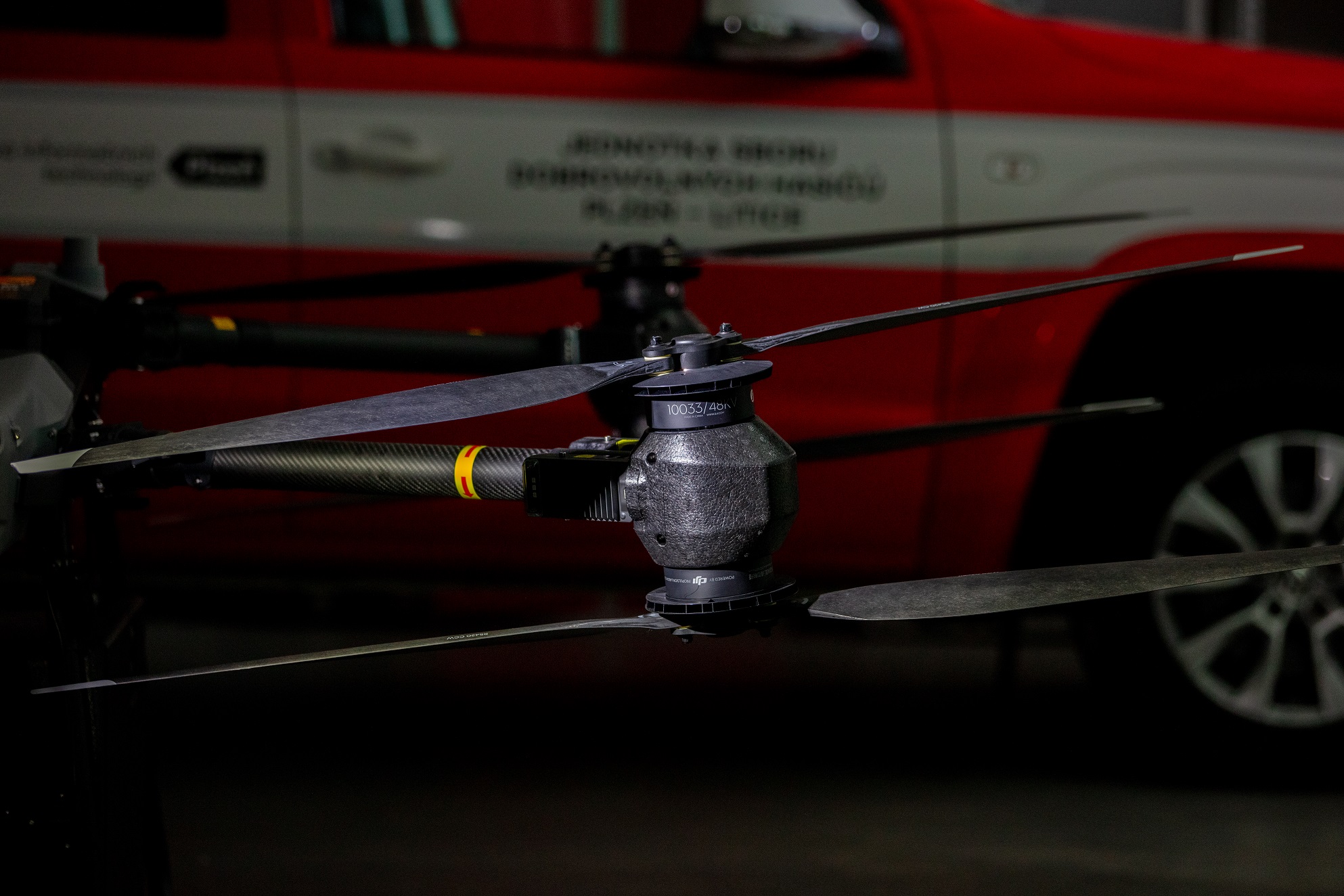
The DJI FlyCart 30 transport drone, designed for professional logistics operations in demanding conditions, was chosen for the project. The drone enables safe transport of cargo using rope and net systems and is designed for operation even in difficult terrain.
A robust communication solution is a matter of course. Not only classic RC communication but also mobile data networks are used to control and coordinate the flight. This enables a more stable connection, better oversight of the drone, and easier integration into existing integrated rescue system communication structures.

Purpose and benefits of the project
The transport drone project aims to increase the efficiency, safety, and flexibility of interventions. It is not technology for technology’s sake, but a practical tool that responds to real needs in the field. Drones act as an extension of logistics—fast, accurate, and accessible even where land transport is difficult or impossible.
In crisis situations, it is often not only the expertise of the responders that matters, but also the accessibility of the right equipment at the right time. Transport drones significantly enhance this critical factor.
Expansion of the project for the Emergency Medical Service of the Pilsen Region – Within the Pilsen Region, the EMS records locations where it can take up to 20 minutes for an ambulance to arrive. However, in the event of sudden cardiac arrest, this time frame leaves virtually no chance of survival. To increase the chances of survival, an AED (automated external defibrillator) must be used. But how can it be delivered there in time?
“After only 5 minutes under standard conditions, irreversible brain damage occurs. Every minute of inactivity, especially if CPR is not performed, means a 10-15% reduction in the probability of survival. Conversely, if an AED is used within 3 to 5 minutes, the chance of survival can reach up to 70%. Therefore, timely performance of defibrillation where indicated is very important. After 10 minutes of inactivity and without the use of an AED, the chance of survival is practically nil.” ⁓ Director of ZZS PK Pavel Hrdlička
As part of a collaborative project with the Emergency Medical Service, we are creating a strategic map for the deployment of unmanned technologies that will be able to fly to locations where the medical emergency service would arrive later than the optimal time on command from the operations centre and confirmation from the drone operator. The operator at the control room who receives the emergency call will decide on his/her own if the use of a drone is needed to transport the AED. If so, the drone operator will be contacted and he or she will fly the drone to the scene of the need. At the site, the box will be placed using a winch. The box will contain the AED machine and other possible equipment that may be useful, such as a tourniquet. The equipment will also include an oxygen generator and oxygen mask.

In the case of a reported sudden cardiac arrest, the operator from the Emergency Department will communicate with the reporting person at all times and the latter will be directed and instructed on the use of the AED or other equipment.
The operation centre will see the current position of the drone with the estimated time of arrival and the video transmission from the drone throughout the entire flight. Thanks to this, it will be possible for the person at the operation centre to have a perfect overview of the situation at the place of need and will also see live the eventual arrival of the ambulance.

For the pilot project, in which we will test the complete technology and strategies, the airport in Líně is selected, currently a base for the air ambulance service, a base for the air army and also an international airport for small aircraft with a pilot on board. The area has been chosen because of the many challenges, which, if we solve, will make the application throughout the Pilsen region all the easier.
The technology that was chosen is the DJI Flycart 30. A drone that can carry up to 30 kilograms of cargo. The maximum speed of this machine is 20 m/s with a maximum flight time of 18 minutes. This drone will be further used in technical support during an IZS (Integrated Rescue Service) intervention where transport of any equipment or gear to hard to reach or otherwise problematic locations will be required. At the same time, it will enable medical support of the IZS units with the assistance of the rescue service.

During testing, the choice of the machine used may change, the main parameters for evaluating the suitability of the drone are:
- Maximum speed
- Meteorological resistance
- Battery capacity
- Carrying capacity
- Capacity for BVLOS flights
- Usability in docking station
- Recharging speed
- Transponders and receivers for ambient flight traffic
- Safety mechanisms and sensors
What will be addressed in the pilot project
- Complete legislation for flying in this mode using unmanned technologies
- BVLOS flights using mobile data
- Coordination of flight operations with both manned and unmanned aircraft
- Connection of other necessary equipment
- Thermal imaging camera – for easier visibility in difficult terrain/night flights
- Loudspeaker – in case of crowds and the need for warning
- Reflector/illuminator – to illuminate the area for boxing or landing
- Other possible…
- Server part to ensure communication between the machine and the operator
- Recall via the Emergency Medical Services Operations Centre
- Hardware part – drone and possible creation of a docking station
- Complete logistics of operation and steps for safety and critical scenarios
- VFR and IFR flights
- Automatic check of the meteorological status of the area through which the drone will fly
- Automatic check of no-fly zones in the flight path
This project is intended to increase the chances of survival throughout the Pilsen region and we hope for future replication in surrounding regions. We are currently in a pilot project and testing within one location in the Pilsen region.
Drones in use

DJI FlyCart 30
Every new contract for us always has the same and only goal - success and a maximally satisfied client.
Contact us